© Ramon Ferré Sánchez/GEPEC-EdCWelcoming Platja de Torredembarra i Creixell to the MedWet Managers Network 22 October 2026 The MedWet Managers Network warmly welcomes Platja de Torredembarra i Creixell, a 62-hectare coastal saline wetland in Ca ...
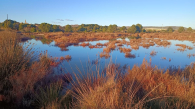

© Ramon Ferré Sánchez/GEPEC-EdCWelcoming Platja de Torredembarra i Creixell to the MedWet Managers Network 22 October 2026 The MedWet Managers Network warmly welcomes Platja de Torredembarra i Creixell, a 62-hectare coastal saline wetland in Ca ...
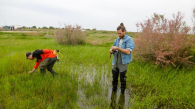
Nestled within one of Türkiye’s busiest metropolitan areas, the Gediz Delta is among the rarest wetlands of its kind — a thriving natural sanctuary surrounded by an urban landscape. Protected under both national and international conservation agreements, this extraordinary ecosystem is home to thousands of species, including an estimated 10% of the world’s greater flamingo population. Recognized as one of only two critical flamingo breeding grounds in Türkiye, the delta has also recorded over 300 bird species to date — from pelicans and shorebirds to birds of prey — making it one of the most biodiverse wetlands in the entire region.
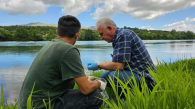
Lake Skadar, shared between Albania and Montenegro, is one of the most important wetlands in the Mediterranean. Designated as a Ramsar Site and a transboundary protected area, the lake covers nearly 49,600 hectares, making it the largest lake in the Balkans and one of the most significant freshwater ecosystems in Europe.

The third Scientific Prespa Lakes Symposium, entitled “Shared Waters, Shared Challenges: Building Climate Resilience in the Prespa Lakes through Science and Cooperation,” was successfully held at Fan S. Noli University in Korçë, following its absence in recent years. The symposium brought together scientists, policymakers, water authorities, and environmental practitioners from Albania, Greece, and North Macedonia. It reaffirmeda shared commitment to coordinated, science-based management of the Prespa basin amid growing climate pressures and water level declines threatening its ecological and socio-economic stability.

The Albufera de Valencia, part of the MedWet Managers Network, illustrates the vital role of coastal wetlands in buffering against floods. Located in the lower parts of river basins, these wetlands can temporarily store large volumes of water and release it gradually. The Iberian Peninsula, the Mediterranean coast—where tides are minimal—is particularly rich in such systems. The Albufera, in the central Gulf of Valencia, is the best-known wetland; however, it forms a continuous system with surrounding marshes, together forming a wide natural floodplain.
This study addresses the challenges of sediment transport and connectivity in the river–delta–coast continuum of the Ebro Delta. It evaluates potential strategies, underlying causes, and impacts, contributing to the sustainable restoration of river-coastal systems.

The REST-COAST project has published a new study titled “Trade-offs and synergies in river-coastal restoration for the Ebro case (Spanish Mediterranean)”, featured in the journal Nature Conservation as part of the project’s open-access collection Restoration of Wetlands.
This study addresses the challenges of sediment transport and connectivity in the river–delta–coast continuum of the Ebro Delta. It evaluates potential strategies, underlying causes, and impacts, contributing to the sustainable restoration of river-coastal systems.

At the end of June, 403 Slender-billed Gull chicks (Larus genei) were ringed in the salt pans of Hyères. Owned by the Conservatoire du Littoral and managed by Toulon Métropole, this site hosts one of the few breeding colonies of Slender-billed Gulls in France. The activity was carried out by the Tour du Valat, LPO PACA, and the Biodiversity and Salins d’Hyères services of the Toulon Provence Méditerranée (TPM).

We are delighted to welcome Ammiq Wetland as the newest member of the MedWet Managers Network! With this addition, Ammiq becomes the third Ramsar site in Lebanon, joining the Palm Islands Nature Reserve and the Tyre Coast Nature Reserve to officially become part of our growing community of wetland site managers across the Mediterranean.

We are delighted to welcome Ammiq Wetland as the newest member of the MedWet Managers Network! With this addition, Ammiq becomes the third Ramsar site in Lebanon, joining the Palm Islands Nature Reserve and the Tyre Coast Nature Reserve to officially become part of our growing community of wetland site managers across the Mediterranean.

We are thrilled to extend a warm welcome to the Saline Wetland in Brijuni National Park, Croatia, as a valued addition to the MedWet Managers Network. Nestled on Veliki Brijun, the largest island within the Brijuni National Park, this wetland spans approximately 11 hectares. Situated in the North Adriatic, Saline serves as an indispensable sanctuary, offering a vital resting place for migratory species traversing the region.