© PPNEA
Third Scientific Prespa Lakes Symposium concludes in Korçë, Albania
5 March 2026
By PrespaNet
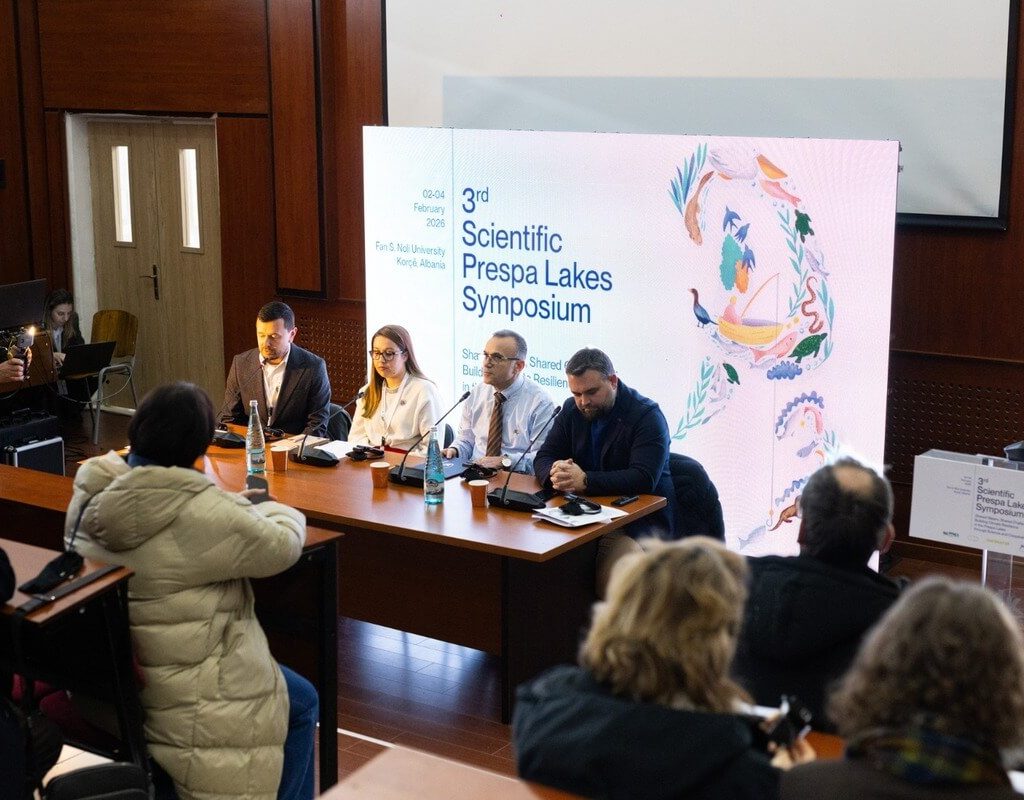
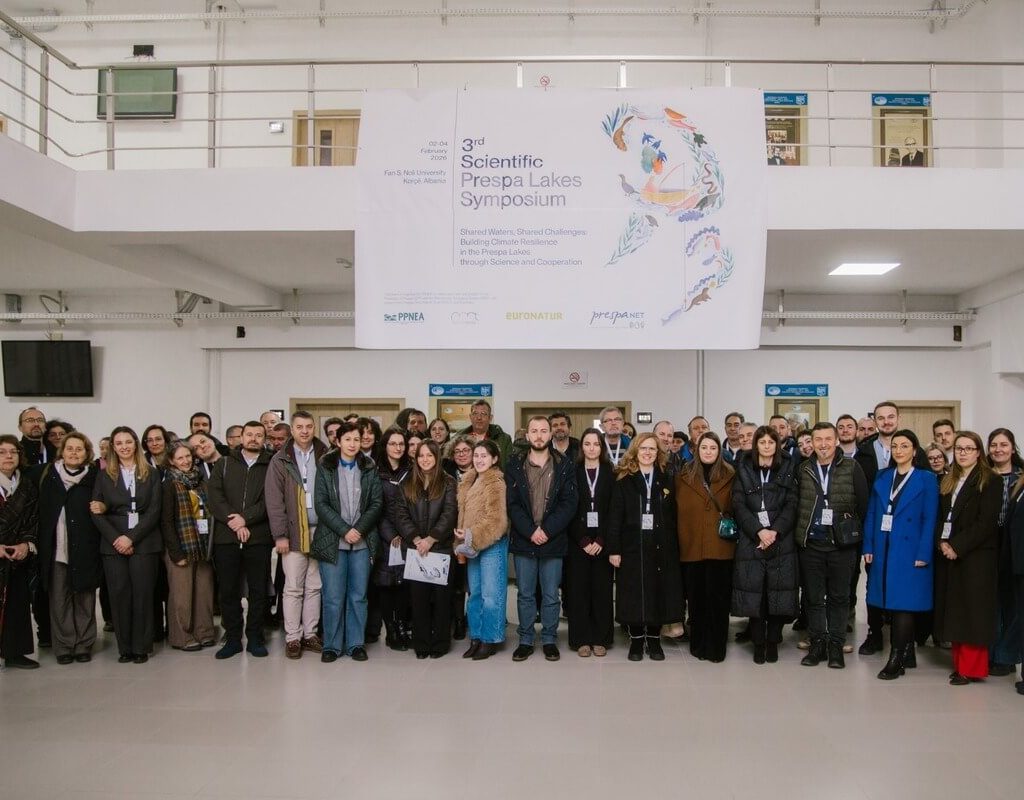
The third Scientific Prespa Lakes Symposium, entitled “Shared Waters, Shared Challenges: Building Climate Resilience in the Prespa Lakes through Science and Cooperation,” was successfully held at Fan S. Noli University in Korçë, following its absence in recent years. The symposium brought together scientists, policymakers, water authorities, and environmental practitioners from Albania, Greece, and North Macedonia. It reaffirmed a shared commitment to coordinated, science-based management of the Prespa basin amid growing climate pressures and water level declines threatening its ecological and socio-economic stability.
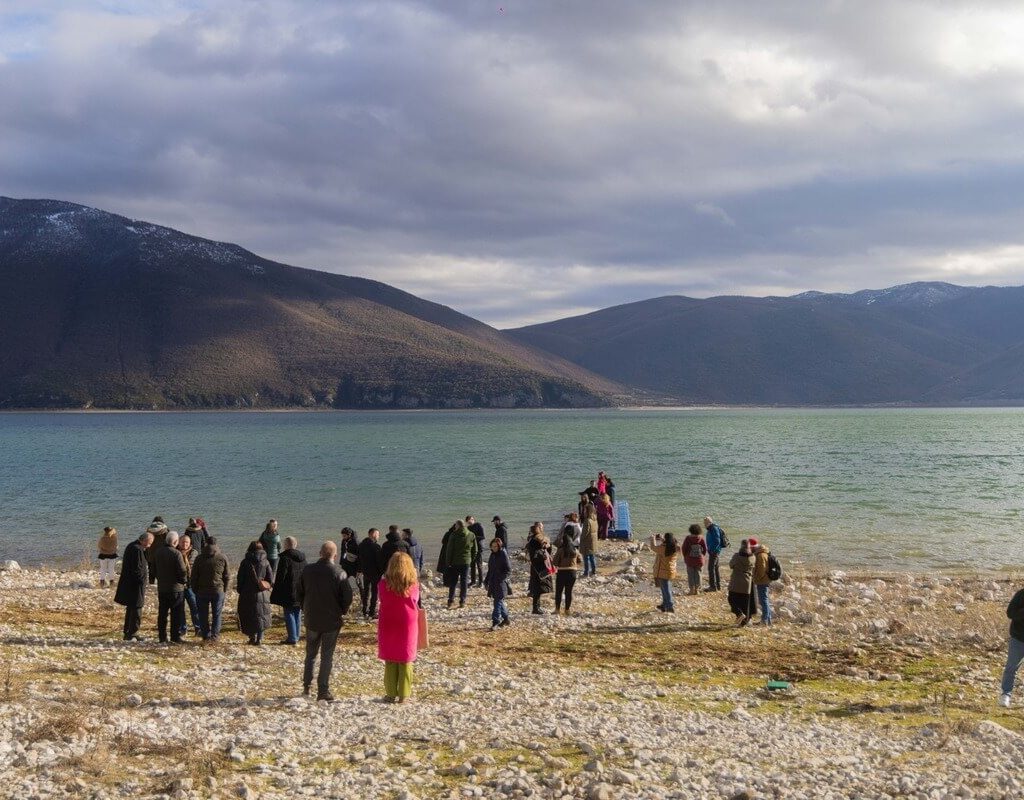
Organised within the framework of the PrespaNet NGO network conservation project, supported by Prespa Ohrid Nature Trust (PONT), the symposium aimed to strengthen transboundary cooperation, build institutional capacity, and promote long-term biodiversity conservation. Its timing is critical, as visible lake level declines—particularly in Pustec—highlight the urgent need for coordinated responses to hydrological stress.
During the opening, the focus was on translating scientific research and trilateral agreements into practical actions. PPNEA Director Dr. Aleksandër Trajçe stressed the importance of implementing studies and monitoring results on the ground, emphasising that isolated efforts are insufficient without coordinated basin-wide actions. Dr. Dragan Arsovski highlighted the importance of long-term biodiversity monitoring and cross-border collaboration, which the PrespaNet network facilitates by allowing researchers from all three countries to share knowledge and data.
Ms. Myrsini Malakou from SPP stressed that climate change impacts are now realities, requiring joint, basin-wide planning beyond fragmented national efforts. Civil society networks play a vital role in fostering dialogue and cooperation.
The opening session specifically covered climate change and water management, focusing on hydro-climatic trends, water availability, and lake level dynamics, supported by data from the Prespa Water Digital initiative. Discussions highlighted the need for harmonised monitoring, standardised indicators, and transboundary data exchange.
Day two addressed biodiversity and ecosystem management, with presentations of climate impacts on fish, waterbirds, wildfires, and ecological processes. Adaptive management practices such as wetland restoration, fire prevention, and sustainable grazing were emphasised. The climate’s increasing impact on local communities was also discussed, including effects on regional agriculture.
A poster session showcased young researchers’ work on climate resilience and transboundary water governance, highlighting youth’s role in future conservation efforts. A field visit to Prespa National Park linked science to practical realities and encouraged cross-border collaboration.
The World Café on wetland habitat conservation, was a key interactive element. Participants discussed community experiences and specific actions needed to address climate impacts, fostering mutual learning and peer exchange.
The symposium concluded by emphasising the importance of sustained cooperation, integrated basin-wide planning, harmonised monitoring, and linking science with policy. Participants recognised Prespa as a successful example of Balkan transboundary cooperation but stressed that ongoing commitment and coordinated action are essential for long-term climate resilience and the protection of the shared natural heritage.
Overall, the event reaffirmed that combining scientific knowledge, cross-border collaboration, and youth engagement is vital for preserving the Prespa Lakes ecosystem and building resilience across the basin. It also acknowledged the wealth of existing knowledge on hydrology, biodiversity, and water issues, while highlighting the urgent need to translate this into effective management actions through a Transboundary Wetland Management Strategy to bolster community resilience.
Source:
https://www.pont.org/third-scientific-prespa-lakes-symposium-concludes-in-korce/